“Making Weird Things” by Olly from Curlworks
Indie Product Design & Thoughtful Production
Here’s the zine I made for my workshop at Design Camp 2025, a quick intro about designing and sourcing your own products (from a U.S. based perspective). Hope it’s helpful— if you like it consider sharing with a friend or snagging something from the shop!
I don’t remember how I printed it, but if you’re more zine-savvy than I you can download the booklet version for printing here and give it a shot. This file will give you 2 booklets per letter sized paper. I just ask that if you print copies, that you don’t sell them.
1. Getting started: why do you want to make things?
Does this actually sound fun?
It takes a lot of trial and error to find your footing. You'll be most successful if you're in it for the love of the game.
Do you have an audience in mind?
Who do you want to make things for? Do you already have an audience who enjoys your work? Who are your people? Do you want to focus on wholesaling (selling products to stores), individuals, or both?
2. Inspiration: woo woo time:
~*~comes from within~*~
You can make literally anything, what do you wish you could own?
Trends are valuable, but they come and go, and following them too closely won't help your work stand out. Give yourself permission to make something brand new.
What makes your work unique to you?
What makes YOU unique? Only you can make the things that you make. Lean into that.
Practical Advice: look for inspiration from inside and outside of your medium.
Don't just look with the goal of designing product, be curious and look mindfully and take note when you like something.
Pay attention to color, texture, material, shape, craftsmanship, etc.
- go to a shop, bookstore, or library
- look at books and magazines
- tour studios and go to art fairs
- meet other artists
- watch random movies, concerts, or plays
- listen to music
- save posts on instagram or pinterest
- tape cool things you find into your sketchbook
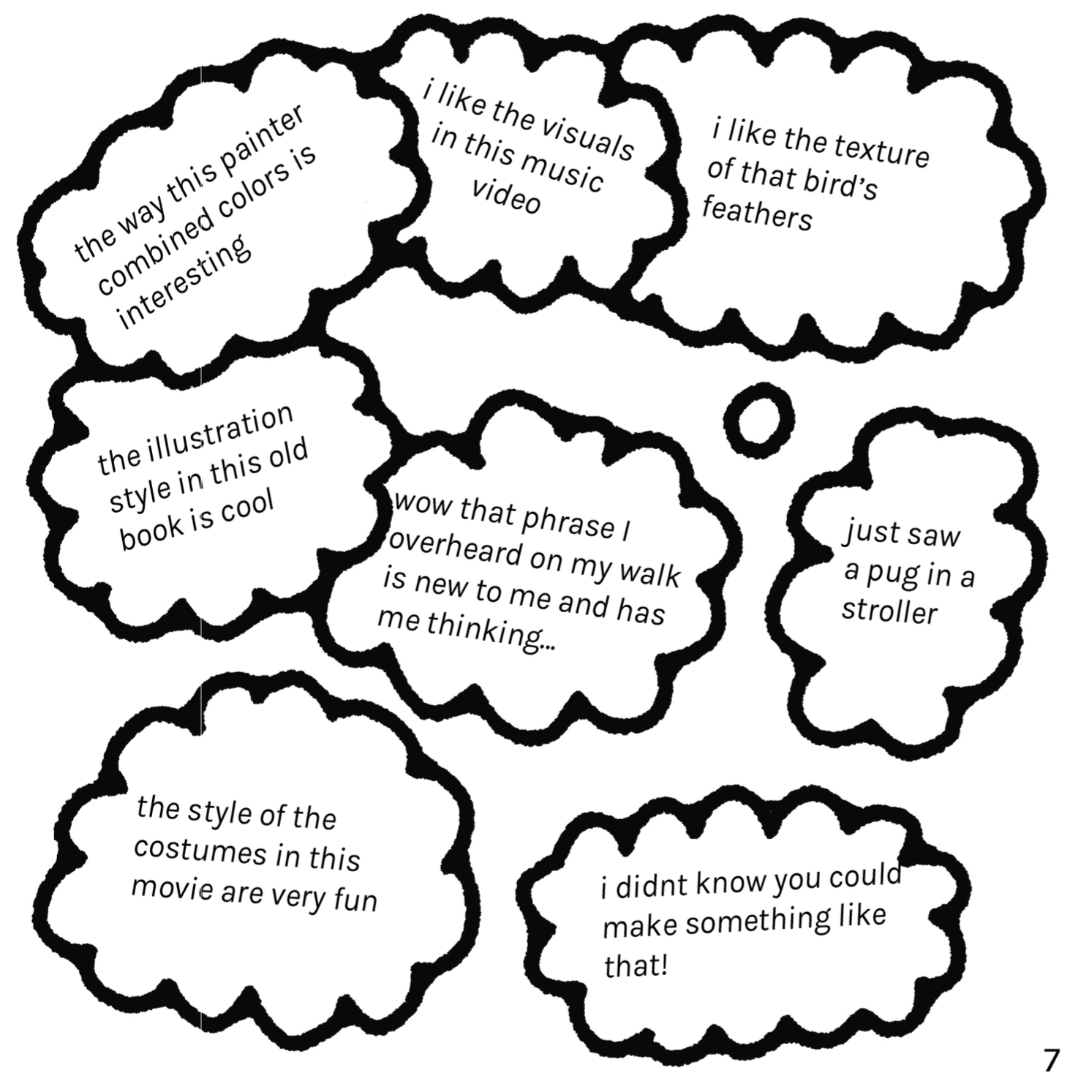
My favorite places for inspiration are completely unrelated to product design:
"Building a life worth living" (therapy moment) and filling your life with a variety of experiences will help you build a rich internal well to draw inspiration from. YOLO, as the kids say.
- go outside, go on a hike, walk in a random direction
- be in community, do things with people who are like and unlike you
- look at a weird subreddit or website
- join a club or sports team
- garden
- go to museums
- watch documentaries
- put your phone away on walks or while you're waiting and look around you
Right now I'm really into: american traditional tattooing, birdwatching & photography, coptic & other ancient tapestry, old wooden toys, playing gay kickball, "Tractor Pull Fail" videos on Youtube, and sign painting.
3. Ideating
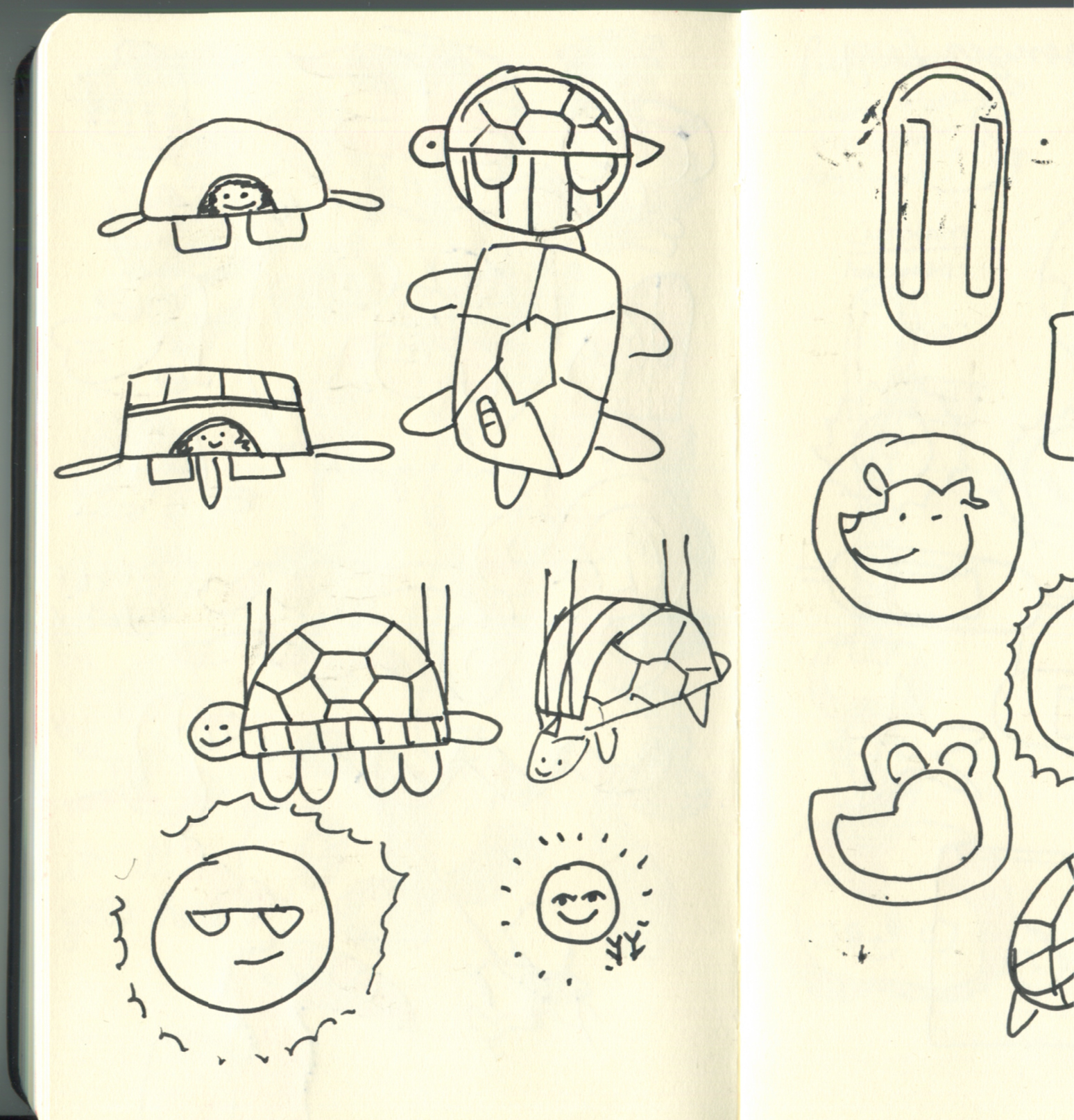
Ready to come up with some ideas? Start sketching-- this can be regular style with a tablet or sketchbook, or something else (like photo collage). You can design a specific product if you have one in mind, or use this to brainstorm. I like to do some sketching before | look at any inspiration, sometimes there are some wacky ideas already in there.
TIP: Make it UGLY!!!!!! The uglier the better! No one will see it (unless you want them to.) Free yourself from the chains of the Instagrammable sketchbook.
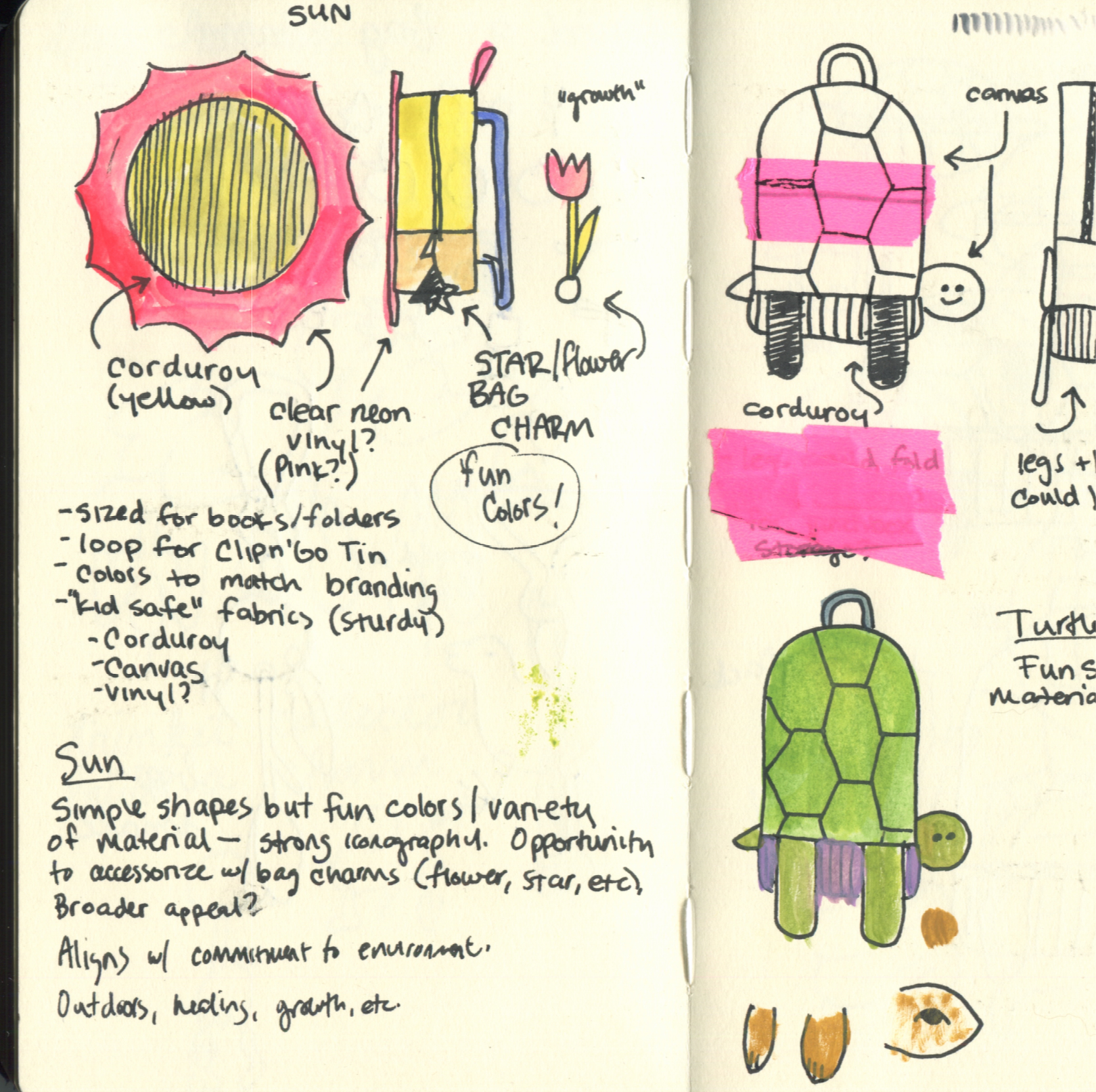
What does my ideation process look like?
1. For most projects, I'll already have a vague idea in mind.
I'll draw from my inspiration pile and then put together a 'mood-board' (usually a private board on Pinterest.)
2. Referencing my inspo, I'II sketch in my sketchbook and brainstorm some general ideas. I'll consider materials, colors, features, anything fun.
3. I'll then sketch and draw a more final design using my iPad with Procreate.
4. Before moving on to production, I'll try to have something fairly final, but still flexible.
4. Production
There are two options for bringing your ideas into fruition.
Handmake: usually lower $$ cost, but costs more time. It's great for lower quantities and a good way to get aquaited with how things are made if you ever decide to outsource your production. This is how I got my start!
Outsource: Requires larger quantities, has a higher up-front cost, but saves you a lot of time (which is valuable!) and allows you to make items you are unable to make by hand. We'll be focusing on this for the rest of this zine.
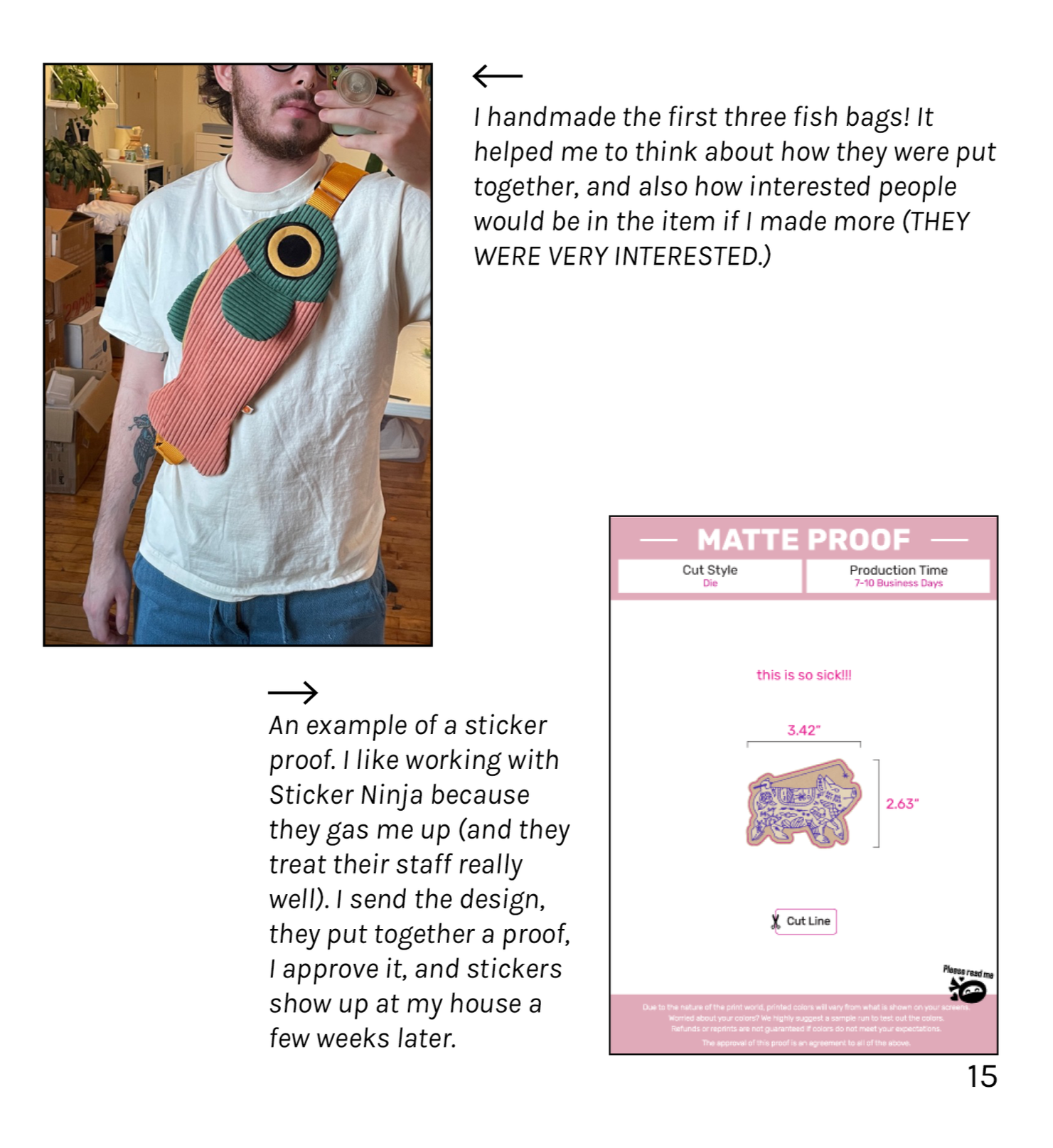
Some items are more straightforward:
These are items that you can typically have made locally or domesically and don't require a lot of back-and forth with the manufacturer.
Usually you will just send the finished artwork and approve a proof. Stickers, prints, and embroidered and screenprinted apparel are usually in this category.
Some items are a little harder:
Manufacturing for folks like us is typically done through Alibaba.com, which is a directory of manufacturers/suppliers from around the world. It can be tricky to figure out the process at first, so I recommend (politely) asking your artist friends for a supplier they like working with so you can learn the ropes. Enamel pins, plush, custom apparel and accessories like hair claws are typically in this category.
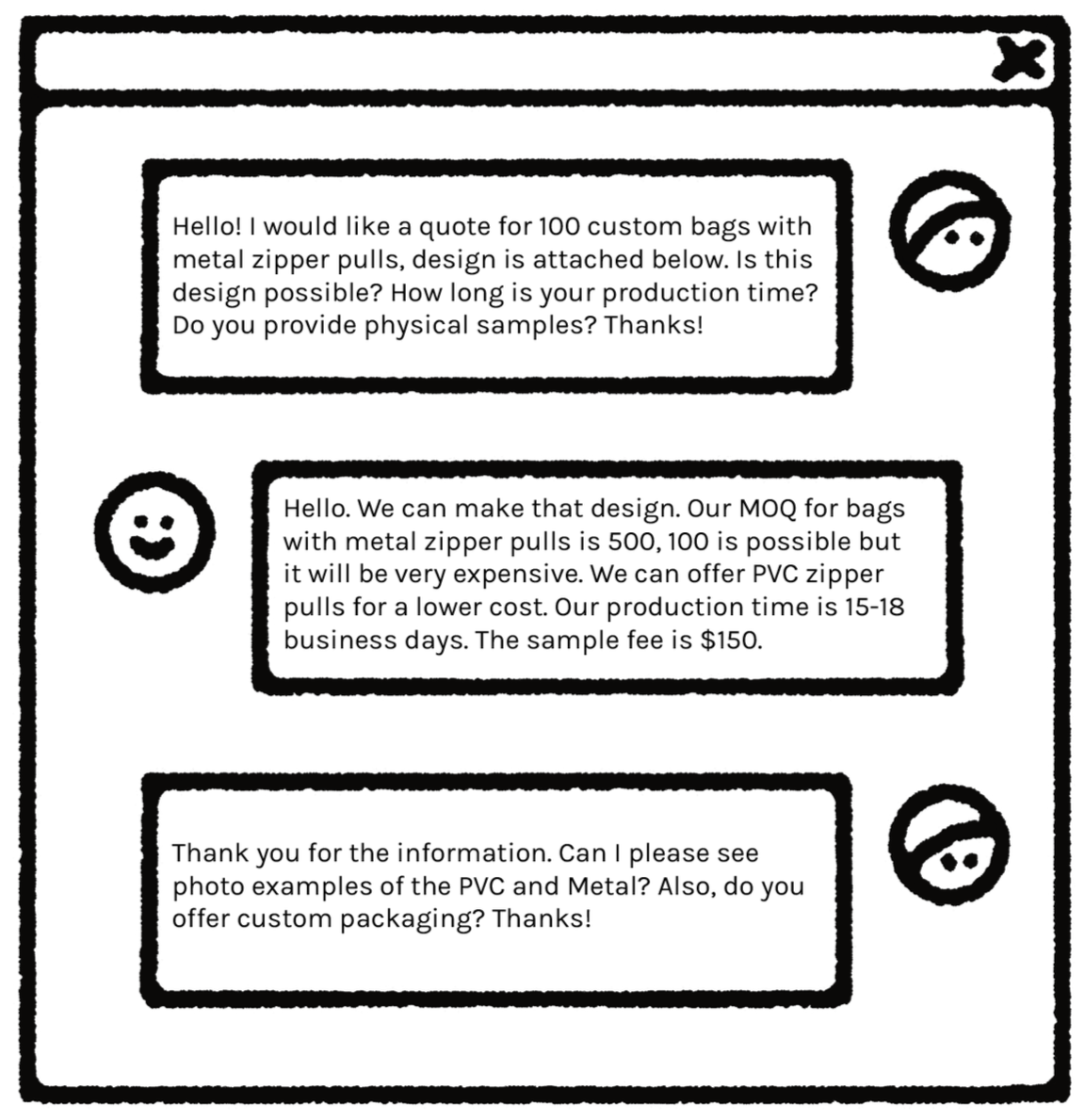
What my production process usually looks like:
1. Find a supplier, for most of my products this is typically through Alibaba.com.
2. Contact the supplier through the Alibaba instant messaging system & send them my design, desired quantity, and any details. Ask for a quote.
3. The representative will typically ask some questions to determine what I'm looking for. I'll ask questions about available materials, manufacturing capabilities, whether samples will be made before mass-production, and their typical production timeline.
4. Use their feedback to figure out what restrictions might affect the design (size, colors, etc) and finalize the design to those specifications.
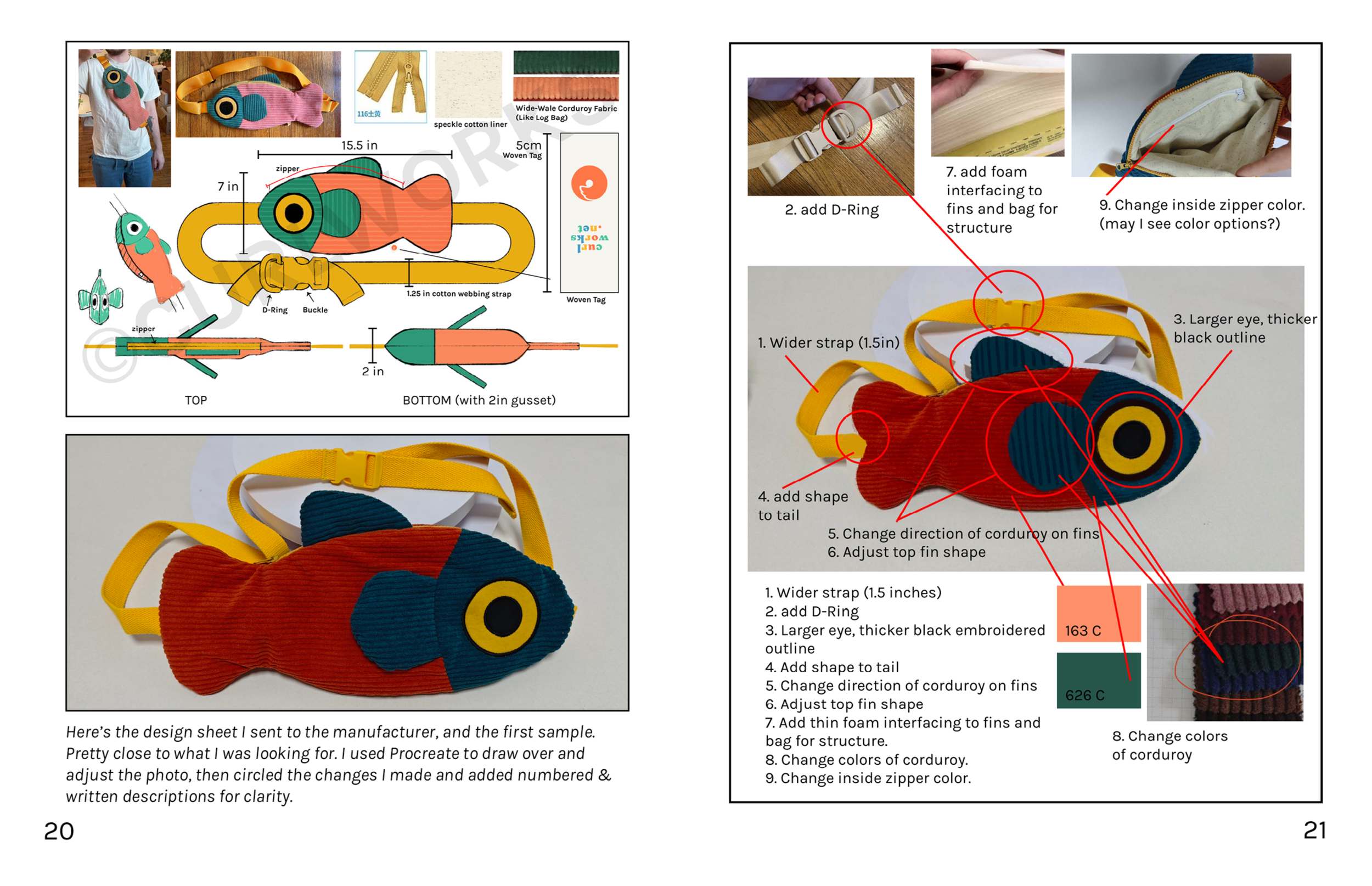
5. I'll send the final design and approve production of a sample.
6. Once the sample is completed (a few weeks later) they will typically send photos. I ask for revisions to the sample, drawing directly on the photo with arrows and clear language. I usually request the final sample be mailed to me for final approval.
7. Once the sample is perfect, I approve mass production. If you haven't yet paid, you'll typically be invoiced now.
8. When the stuff is done, it's shipped to me, which can take anywhere from a few days to a few months depending on the size of the shipment. Neat!
TED TALK TIME: Ethics & Responsibility
Over the years, working conditions in many factories have improved, but it's still important to acknowledge that mass manufacturing anywhere - even in the US - raises questions about labor practices, environmental impact, and sustainability.
China specifically has focused a lot of time and energy on building their manufacturing infrastructure, and as a result has developed machinery and processes that we simply do not have access to here in the states. While it would be helpful to use local factories that we could visit and vet in person, many of these simply do not exist in the US for this reason.
As small-time folks we don't have the resources to check out overseas factories in the flesh, but we can do our best to make sure the folks we work with and the environment are being treated ethically. Do some research to see what sorts of social certifications and safety audits apply to the product you're having made, and ask to see that paperwork- a supplier worth working with should be willing to share and answer any questions.
Also-- expect some language barrier, and be patient and kind to your reps who are working hard to help you make cool stuff (and who put in the work to learn your language!) Be respectful of the resources others are putting into your work.
How does my method of production factor into my design process?
Everything takes some labor, but look into how your item is made- you may be suprised to learn what can and can't be made by a machine and must be completely done by hand. Are there ways you can design your
¡tems to require less manual labor?
Embroidered patches, for example: A round patch can be finished by a machine, whereas a more complicated shape must each be finished by hand.
There is no machine that can crochet, weave baskets, do beadwork, sew clothing or plush, for example.
TED TALK 2: WHY not just use Al to come up with ideas?
After 10 years in this biz | get a lot of personal fulfilment from the process of ideation and bringing my ideas to fruition. My work feels uniquely mine, and that feels very good.
Designing and ideation is a muscle that you need to keep training if you want to feel fulfilled in your creative work. The more you use Al, the more you lose that muscle. Aside from the legal, ethical, and ecological challenges facing Al, when you ask Al for ideas, your unique point of view is lost and you're robbing yourself of the chance to develop those critical design skills.